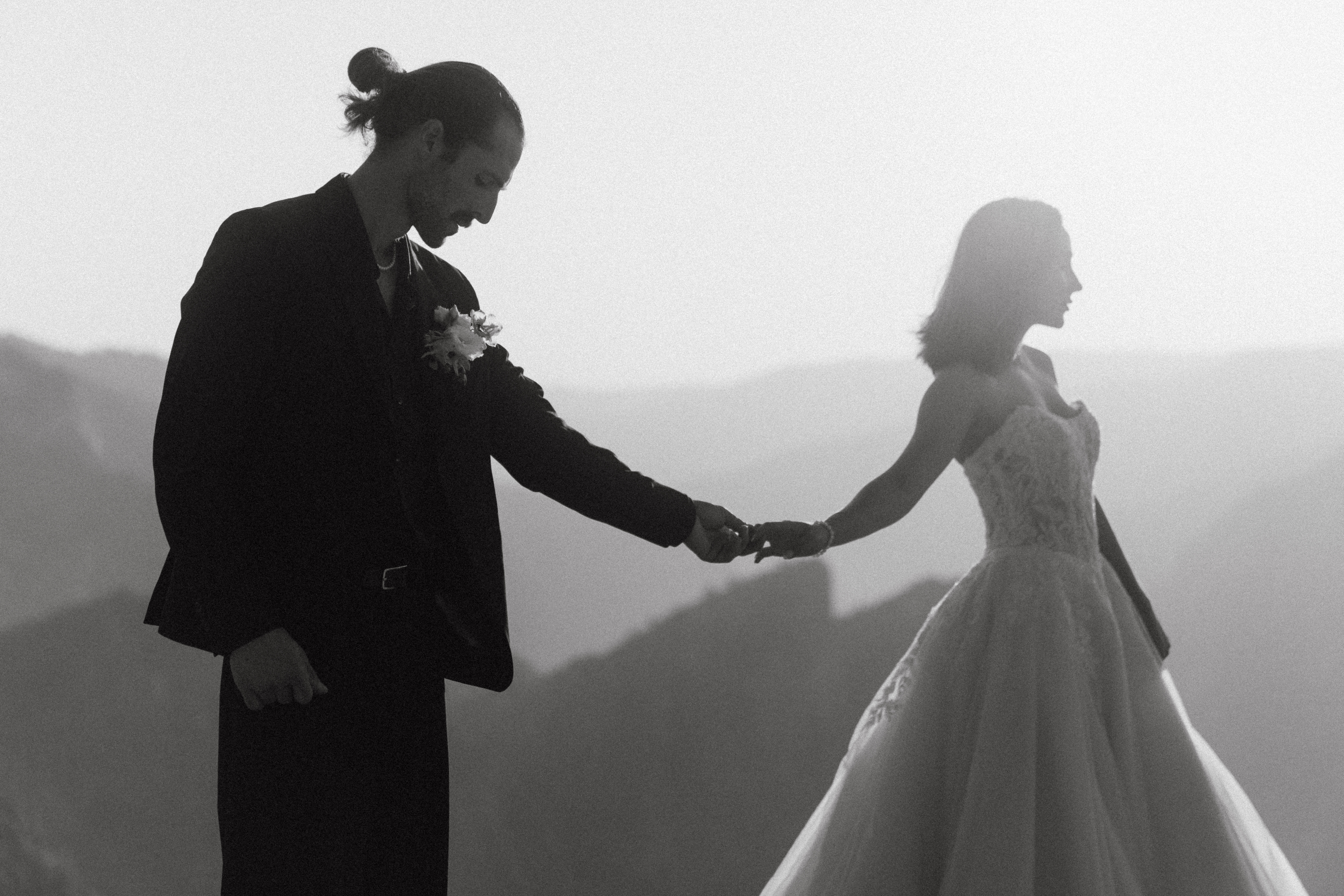

A wedding timeline shouldn’t feel like a spreadsheet. It should feel like an inhale and exhale—rhythmic, intuitive, and built around the way you move through the day. Yet most couples unknowingly build timelines that sabotage them: too tight, too detailed, or too packed with “shoulds” they never wanted in the first place.
This guide strips all of that away.
Whether you’re planning a high-style destination weekend or a chic, modern celebration close to home, this is the framework I use to build timelines that feel effortless, emotional, and alive—so your photos look like your real life, not a day-long photo shoot.
01. Before You Touch a Clock, Get Clear on the Emotional Arc of Your Day
A wedding is not a sequence of events. It’s an emotional progression.
When couples start with logistics instead of intention, the day starts to feel transactional. You can see it in the photos: hurried mornings, stiff portraits, forced moments, energy spikes followed by lulls.
So before you assign a single time, ask yourselves:
- Do we want a slow, grounding morning or a lively, get-the-party-started vibe?
- Do we want portraits that feel cinematic and intentional—or candid, fly-on-the-wall moments between everything else?
- Do we want the ceremony to feel traditional and structured or intimate and organic?
- Do we want the reception to be a dinner party, a rager, or both?
Once you name the emotional tone, then we build the day around it.
The Emotional Arc Formula
Most couples fall into one of these:
The Slow Burn
Calm morning → intimate first look → relaxed portraits → heartfelt ceremony → long cocktail hour → dance-heavy reception.
The High-Energy Wave
Late start → electric first look → quick portraits → upbeat ceremony → high-tempo reception → flash-heavy dance floor.
The Editorial Romance
Minimal morning noise → stylized portraits → elegant ceremony → elevated dinner → chic flash-forward after-party.
Your timeline should support the feeling—not fight it.
02. The Biggest Timeline Mistakes Couples Make (And How to Avoid Them)
These mistakes are universal, avoidable, and absolutely timeline killers.
Mistake #1: Starting the Day Too Late
You don’t feel behind because of the ceremony time—you feel behind because you started getting ready 45 minutes later than you should have.
Fix: Add 45–60 minutes to any hair/makeup estimate, period.
Mistake #2: Trying to Cram Too Many Photo Moments In
You don’t need nine groupings, endless Pinterest references, or 100 must-have shots.
Fix: Prioritize real connection over volume. Editorial > quantity.
Mistake #3: Ignoring the Reality of Light
Your ceremony time affects everything—portraits, family photos, reception lighting, golden hour. Your photographer is your best guide here.
Fix: Lock your ceremony time only after discussing ideal light.
Mistake #4: Forgetting Transition Time
Walking between locations, bustling your dress, a bathroom break—you need small breathers.
Fix: Add 10-minute buffers between everything.
Mistake #4: Not Planning for Candid Moments
Candid photos don’t appear magically—they require space.
Fix: Build “non-structured time pockets” where moments can breathe.
03. The Timeline Blueprint: What a Flowing Day Actually Looks Like
Below is the signature West James structure—the frame that consistently produces galleries that feel elegant, human, and naturally editorial.
Morning: Setting the Tone (Slow, Intentional, Zero Chaos)
Getting Ready (2–3 hours)
This is where the emotional foundation is set. Calm mornings create calm photos. Rushed mornings create tight shoulders, overwhelmed faces, and missed candids.
What’s photographed:
- Details (flatlays, accessories, heirlooms)
- Candid moments with friends/family
- Hair/makeup touchups
- Morning atmosphere (music, coffee, laughter)
Pro Tip:
Declutter early. One clean room makes a massive difference in the gallery.
First Look (Optional, but Powerful)
A first look is not about photos—it’s about creating psychological and emotional breathing room.
Why it works:
- Creates space for intentional portraits
- Reduces pressure during the ceremony
- Gives you a moment alone
- Allows more cocktail hour time with guests
- Produces some of the most honest reactions
Time Needed: ~20 minutes for the moment, 20 minutes for portraits.
If you skip it, that’s totally fine—we just adjust the structure.
Portraits With Intention (40–60 minutes)
Think editorial, movement, interaction—not stiff posing. We design this around light, location, and your vibe.
The best portraits happen when you’re relaxed, not rushed.
That’s why building portraits early keeps the entire day fluid.
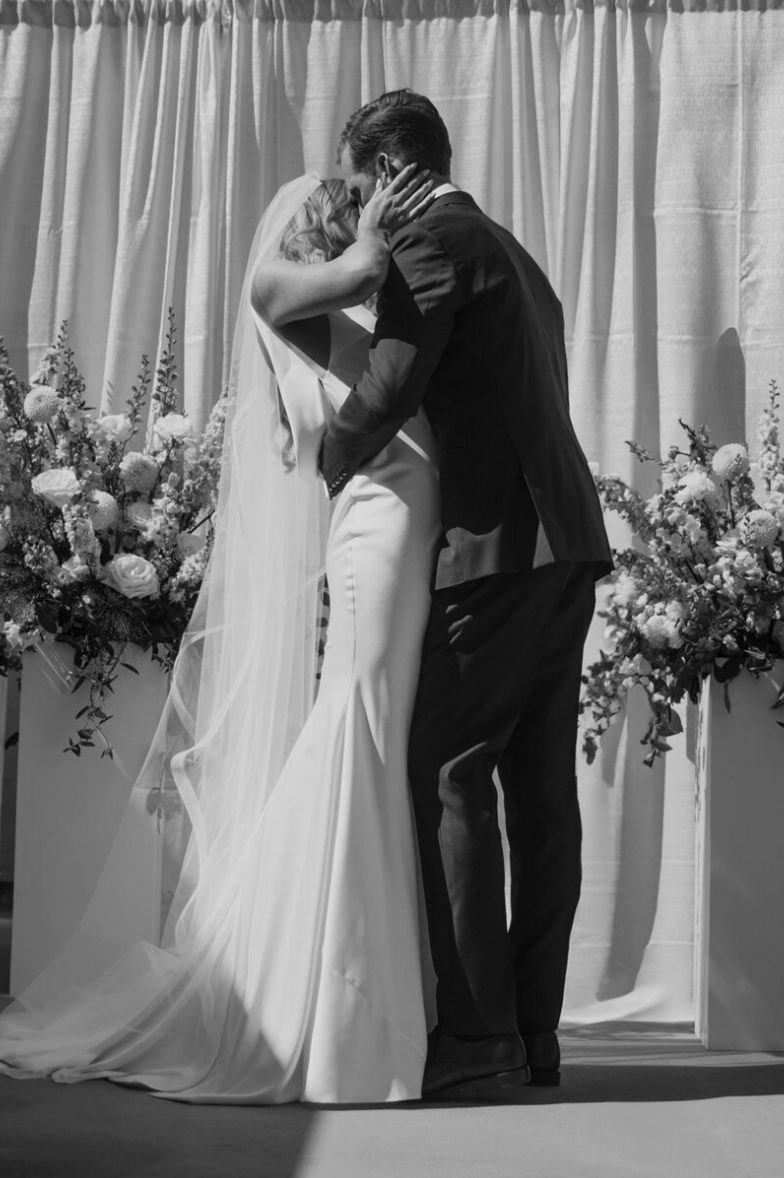
Ceremony (20–60 minutes)
Your ceremony timing affects golden hour more than anything else.
Examples:
- Summer: Aim for 1.5–2 hours before sunset
- Winter: 2.5–3 hours before sunset
- Indoor ceremonies: Light matters less—emotion matters more
Important:
Family photos only happen after the ceremony, not before. Everyone is guaranteed to be present.
Family Photos (20–30 minutes)
This is the section couples dread—but it doesn’t need to be chaotic.
How we streamline:
- Pre-written list
- One point person on each side
- Simple, classic groupings
- Clean backgrounds
- No overstuffed group photos
This keeps everything efficient and elegant.
Cocktail Hour (60–90 minutes)
Most couples never experience their cocktail hour because they planned poorly.
At West James, we protect cocktail hour whenever possible because:
- You get candid photos with guests
- You get to relax
- You’re not trapped in an endless portrait loop
The best photos don’t happen under pressure—they happen in comfort.
Golden Hour Portraits (10–20 minutes)
This is your cinematic moment.
Warm, directional light that adds glow, softness, and emotional atmosphere.
Couples worry that leaving their reception interrupts the flow—it doesn’t. It elevates it.
These 10 minutes become the photos people print.
Reception (2–4 hours)
This is where the energy shifts from elegant to expressive. Your photos should follow that rhythm, not try to control it.
Key moments:
- Grand entrance
- First dance
- Speeches
- Dance floor opening
- Flash-forward energy
If you want vibrant, alive, party-forward photos, don’t skip this next part.
The Dance Floor Formula (The West James Signature)
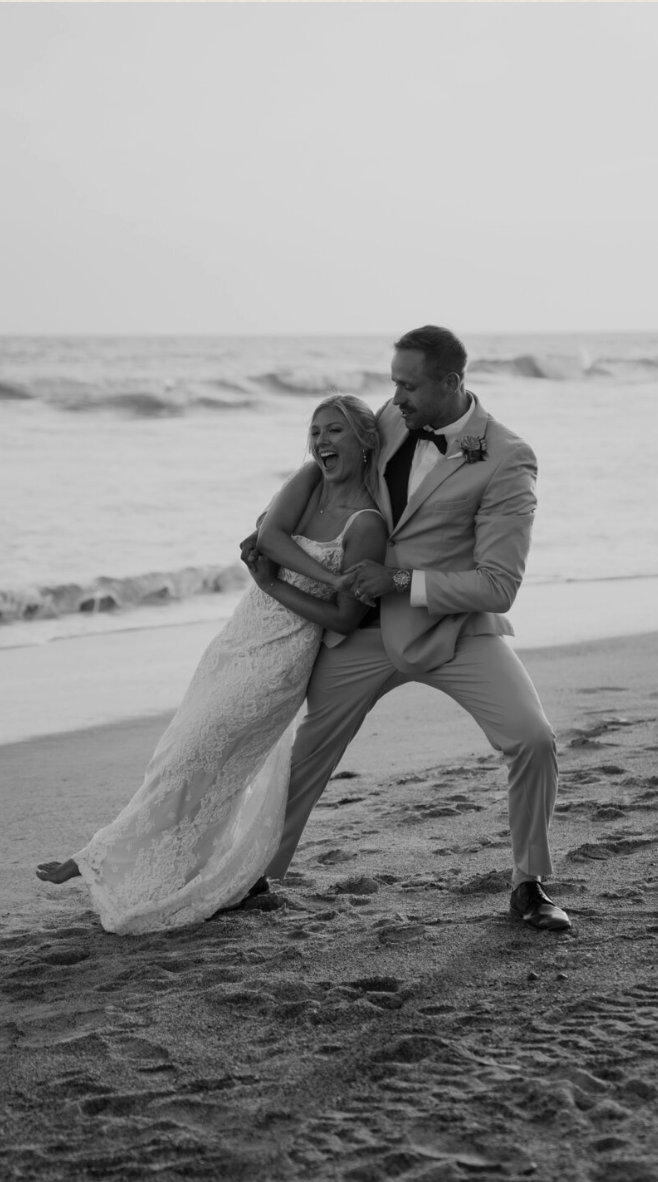
You want photos that feel like movement, not chaos.
What makes the difference:
- Flash used intentionally (not harsh, not sloppy)
- Photographer staying 15–20 minutes after the peak
- Movement-based directing (“Stay where you are—do that again!”)
- Allowing room for the dance floor to build
The first 10 minutes of the dance floor are not the best photos.
The 30–40 minute mark is where the real magic happens.
The Best Timeline for 90% of Weddings
(Assuming a sunset around 6:30 pm)
- 11:00 — Getting ready coverage begins
- 1:00 — Details + prep candids
- 2:30 — First look
- 3:00 — Portraits
- 4:00 — Ceremony
- 4:45 — Family photos
- 5:15 — Cocktail hour + couple joins
- 6:00 — Golden hour portraits
- 6:30 — Reception begins
- 7:00 — Dinner
- 7:45 — Speeches
- 8:15 — First dances
- 8:45 — Dance floor opens
- 9:15 — Peak dance floor photos
- 9:30 — Photo coverage ends
But that’s just the blueprint—every couple gets a custom version.
04. Destination Weddings: How Timelines Shift (and Why That’s Good)
Destination weddings breathe differently.
They’re slower, more sensory, more intention-led.
Location dictates light, texture, movement, and pacing.
What changes:
- Getting ready spaces are usually more aesthetic
- Travel time matters
- Cultural elements shape the flow
- Guest count is often smaller
- Sunset times may be drastically different
Paris? Soft mornings + late dining.
Mexico? Golden hour hits earlier.
London? Cloud cover gives you diffused editorial light all day.
Destination weddings often benefit from:
- A longer photo window
- More candid guest coverage
- Less rigid transitions
- Unplanned micro-moments (markets, alleyways, architecture)
Timelines become less about order and more about experience.
05. The Psychology of a Stress-Free Timeline (This Is Where Most Guides Fall Short)
A timeline is not just logistics—it’s emotional engineering.
When couples feel rushed, here’s what happens:
- shoulders tense
- micro-expressions tighten
- decision fatigue sets in
- they stop being present
When the day flows, here’s what you get:
- effortless portraits
- honest reactions
- deeper connection
- genuine joy
Your photos will show how you felt—so the timeline must protect the emotional environment.
06. Building a Timeline With Your Photographer: What You Actually Need From Us
Too many photographers simply “fit themselves into the timeline.”
At West James, timeline creation is collaborative—and strategic.
We walk you through:
- Light quality at your venue
- Environmental factors (wind, crowds, terrain)
- Travel logistics
- Cultural/religious ceremony elements
- Weather alternatives
- Pacing for comfort and authenticity
The goal:
A day that feels like the best version of your relationship—not a performance.
07. How to Know Your Timeline Actually Works
A great timeline gives you:
- Time to breathe
- Time to connect
- Time to be human
- Time to experience the day you planned
A bad timeline gives you:
- Stress
- Rushed portraits
- Missed moments
- No cocktail hour
- A gallery that feels thin
A great one feels like water—smooth, intuitive, supportive.
Closing: Your Wedding Day Should Feel Like You, Not a Checklist
When the timeline supports you, you’re free to be present.
When you’re present, your photos feel alive.
That’s the entire point.
If you want a timeline that feels intentional, elegant, and truly reflective of your relationship—not the internet’s idea of one—I’ll build it with you, step by step.
Because the best photos don’t happen when the day is perfectly planned.
They happen when the day unfolds naturally.


Comments +